
Confined-space entry has always been one of the most dangerous activities in the maritime industry. From cargo holds and ballast tanks to pump rooms and engine compartments, enclosed spaces onboard vessels present serious atmospheric hazards that can quickly become fatal if not properly monitored.
In recent years, carbon dioxide (CO₂) has emerged as one of the leading causes of fatalities in enclosed and adjacent shipboard spaces — prompting a major regulatory shift across the global maritime industry.
As a result, the International Maritime Organization (IMO) introduced regulation MSC.581(110), which officially came into force in December 2025. The new regulation significantly strengthens confined-space entry requirements and introduces mandatory CO₂ monitoring onboard vessels.
Understanding the New IMO Regulation
The latest IMO regulation replaces the previous A.1050(27) requirements and introduces stricter, more comprehensive atmospheric testing procedures before entry into enclosed spaces.
Under MSC.581(110), vessels must now ensure:
- Mandatory CO₂ monitoring
- Improved multi-gas detection capability
- Enhanced atmospheric testing procedures
- Expanded testing requirements for adjacent and connected spaces
- Increased focus on calibration accuracy and detector compliance
The regulation also introduces new atmospheric thresholds that must be met before entry is permitted.
Minimum Conditions Before Entry
According to MSC.581(110), confined-space entry should only take place when atmospheric conditions meet the following requirements:
- Oxygen (O₂): 20.9%
- Carbon dioxide (CO₂): Below 0.5% (5,000 ppm)
- Flammable gases: Below 1% LFL/LEL
- Toxic gases: Below 50% of Occupational Exposure Limits (OELs)
These changes mean that many legacy gas detectors currently onboard vessels may no longer be compliant.
These detectors, combined with proper installation and maintenance, form the foundation of an effective ammonia safety strategy.
What Is Classified as an Enclosed Space?
The IMO defines an enclosed space as any area that:
- Has limited openings for entry and exit
- Has inadequate ventilation
- Is not designed for continuous human occupancy
Examples include:
- Cargo holds
- Ballast tanks
- Bilge spaces
- Pump rooms
- Chain lockers
- Engine crankcases
These areas can rapidly develop dangerous atmospheres due to cargo emissions, oxygen displacement, fuel vapours, or fire suppression systems.
Why CO₂ Monitoring Has Become Mandatory
The push for mandatory CO₂ detection follows several fatal maritime incidents and alarming industry statistics.
Data submitted to the IMO by InterManager revealed:
- Casualties in enclosed spaces doubled between 2022 and 2023
- 66% of fatalities involved senior officers
- Reporting delays and inconsistent gas testing procedures continue to place crews at risk
One of the most severe incidents involved the bulk carrier MV Jin Hai Xiang, where accidental activation of the ship’s CO₂ fire suppression system resulted in 10 fatalities and 19 hospitalisations.
Another tragic case involved three stevedores who died after exposure to dangerously high CO₂ concentrations emitted by organic cargo.
Historically, confined-space testing focused primarily on oxygen levels, flammable gases, carbon monoxide, and hydrogen sulphide. However, these incidents demonstrated that CO₂ can become lethal even when oxygen readings appear normal.
What Ship Operators Should Prioritise
The new regulation means maritime operators, safety managers, and procurement teams must reassess their gas detection capabilities.
1. Accurate CO₂ Detection
Many older portable gas detectors do not include CO₂ sensors. Under MSC.581(110), this capability is increasingly essential — particularly for:
- Bulk carriers
- Tankers
- Engine rooms
- Firefighting system compartments
2. Faster, Smarter Gas Detection Technology
Modern gas detectors should offer:
- Fast sensor response times
- Integrated pump functionality
- Automated calibration and bump testing compatibility
- Rugged reliability for marine environments
- Manual emergency alarm functionality such as InstantAlert®
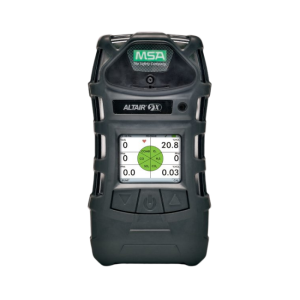
MSA’s ALTAIR® 5X Multigas Detector is designed to detect up to five gases in one pumped unit, including CO₂, while supporting advanced maritime safety requirements.
3. Proper Calibration Practices
- Several investigations uncovered gas detectors calibrated with incorrect span gas mixtures, resulting in unreliable readings.
- Proper calibration procedures are now more critical than ever to ensure accurate atmospheric testing and regulatory compliance.
4. Vessel-Specific Compliance
MSC.581(110) also states that ships should carry at least two calibrated personal gas detectors, while vessels carrying hazardous cargoes or requiring frequent cargo-space entry should carry a minimum of four devices.
A New Era of Maritime Safety
MSC.581(110) represents one of the most significant updates to maritime confined-space safety in recent years. By making CO₂ a mandatory test parameter and expanding atmospheric testing requirements, the IMO is addressing long-standing gaps in maritime safety procedures.
For ship owners, operators, and safety managers, this means that gas detection procurement strategies must evolve to prioritise:
- CO₂ capability
- Advanced multi-gas detection
- Reliable calibration practices
- Digital compliance and recordkeeping
- Faster and more accurate atmospheric testing
As maritime safety standards continue to evolve, investing in compliant, future-ready gas detection technology is no longer optional. it is essential for protecting crews, ensuring operational compliance, and preventing avoidable tragedies at sea.

Why CO₂ Hazards Are Driving a New Era of Marine Gas Detection
Discover the hazards of ammonia gas leaks in refrigeration. Learn about advanced detection solutions and safety strategies to protect workers and ensure compliance.
Ammonia Risks in Fertiliser Production: Safety Solutions
Discover the hazards of ammonia gas leaks in refrigeration. Learn about advanced detection solutions and safety strategies to protect workers and ensure compliance.
Managing Ammonia Gas Leaks in the Refrigeration Industry
Discover the hazards of ammonia gas leaks in refrigeration. Learn about advanced detection solutions and safety strategies to protect workers and ensure compliance.